
Supplements should Supplement, not replace.
In a world full of quick fixes, it is easy to see why Supplements have become so popular. They are convenient, easy to incorporate into your daily routine and often have been thought of as a simple way to support your health goals.
Supplements can, and do, play a valuable role in supporting your wellbeing and can help to fill nutritional gaps when used correctly. For example:
Vitamin C contributes to the normal function of the immune system
Vitamin D contributes to the maintenance of normal bones
Choline contributes to the maintenance of normal live function
(Commission Regulation (EU) 432/2012)
However, Supplements are exactly what the name suggests, and should 'Supplement' your lifestyle, not substitute for it. They cannot override poor lifestyle habits and are instead designed to support a healthy body. By combining smart supplementation with strong daily habits that truly support your body, you will be on track to becoming the best version of yourself.
Three 'More Obvious' Components For a Healthy Lifestyle
Before thinking about what to Supplement, it's important to get the basics right. You need to set the foundations of your body correctly, before introducing Supplementation.
1. Hydration: The Most Overlooked Essential
Water plays a vital role in nearly every bodily function from digestion to circulation to temperature regulation. Even mild dehydration can impact energy levels and concentration, so it is important to make sure you are drinking plenty of fluids (NHS, 2003).
Simple Tip: Keep a filled water bottle nearby and set yourself hydration goals throughout the day.
Simple Tip: Cups of tea, or glasses of squash also count if you don't want to drink pure water.
2. Sleep: Where the Recovery Happens
You can take all the supplements in the world, but if your sleep is lacking then your body will never really have chance to recover from every day stresses. Adequate sleep is strongly linked to energy regulation, as it helps to restore metabolic balance and therefore reduce fatigue during the day (Hirshkowitz et al., 2015). Think of sleep as your body's chance to 'reset' each night.
Simple Tip: Aim for consistency… try and go to bed and wake up at similar times every night.
Simple Tip: Whilst it's tempting to lie in on your days off work, keep the consistency going every day!
3. Movement: More Than Just Exercise
Regular movement supports both physical and mental wellbeing, even when the movement comes from simple, everyday activities rather than structured exercise. Research shows that regular physical activity helps to improve cardiovascular health, muscle function, and overall energy levels, while also contributing to reduced symptoms of anxiety and depression (World Health Organization, 2020; Warburton and Bredin, 2017).
Simple Tip: Try to set aside 20 minutes for some form of exercise every day, even it is for a slow walk.
Three 'Less Obvious' Components For a Healthy Lifestyle
Beyond the basics, there are a few often overlooked areas that can have a powerful impact on how you feel.
1. Stress Management
Chronic stress has been shown to weaken immune function, making the body more susceptible to illness (Glaser and Kiecolt-Glaser, 2005). Stress can also disrupt sleep by activating the body’s stress-response system and affecting hormonal balance (Han et al., 2012). Over time, this will naturally lead to fatigue, poorer concentration and reduced wellbeing.
Simple Tip: Take regular breaks throughout the working day, even for 5 minutes to stretch your legs. This should help reduce your mental fatigue and keep you working at your optimum (Trougakos & Hideg, 2009).
2. Sunlight & Daily Rhythm
Exposure to natural light can play a key role in regulating the body’s circadian rhythm, which is the internal body clock governing sleep/wake cycles, mood and energy levels. Within the circadian rhythms, light acts as the primary environmental cue that helps to synchronise the cycles, influence hormone release and maintain alertness patterns throughout the day (Czeisler et al., 1999; Beersma and Gordijn, 2007).
Research also suggests that exposure to morning light can be particularly beneficial, helping to align the timing of the circadian system and improve sleep quality and daytime alertness over time (Khalsa et al., 2003).
Simple Tip: As soon as you are awake, open your blinds before doing anything else so that you can adjust to the natural light.
3. Consistency Over Perfection
Behavioural science shows that habits are formed through consistent repetition, rather than through occasional or one-off actions. Performing a behaviour regularly increases its how automatic it becomes over time, making it easier to sustain without relying on motivation alone (Lally et al., 2010). This means that smaller, repeatable actions are more effective for long-term behaviour change rather than one-off, sporadic “perfect” efforts (Gardner et al., 2012).
Simple Tip: Every 1st of the month, choose a small habit that you wish to break, or improve, and work on it every day over the course of the month. You should find that by the time the next month starts, the habit change has occurred and you do not even think about it anymore!
Where Supplements Fit In
Whilst supplements play a role in wellbeing, they will work best when everything else is in place so that your body can digest/use the supplements in the most effective way. Supplements can enhance your routine by:
Supporting normal physiological functions
Helping to maintain nutrient intake where diets may fall short
Complementing an active, health-focused lifestyle
Are You Ready to Supplement instead of Substitute?
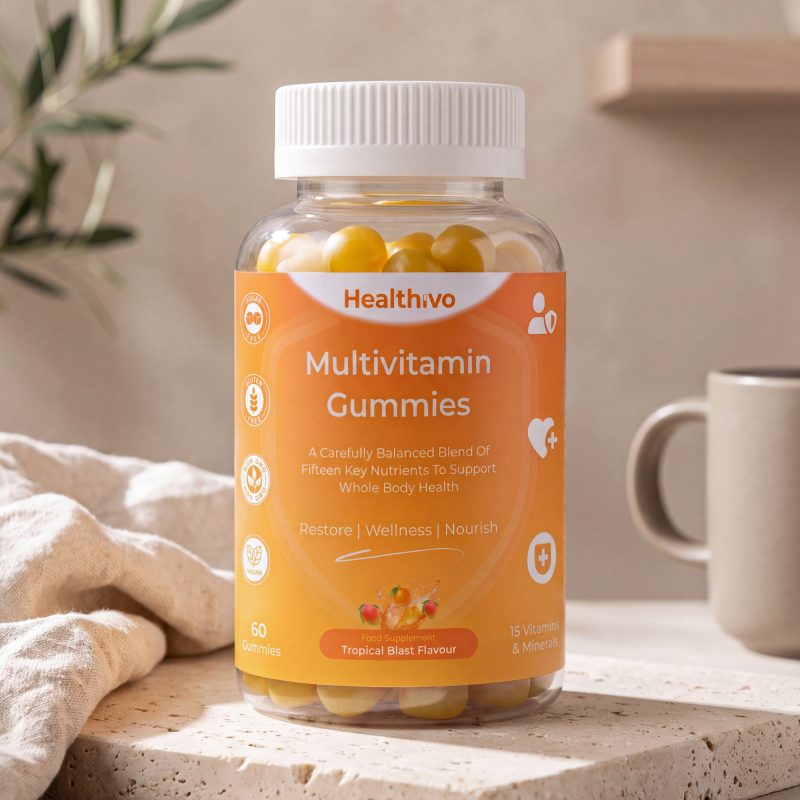
If you believe you are already building healthy habits, or have the healthy habits locked down and are ready to take the next step, then explore Healthivo's range of thoughtfully developed Supplements designed to support your lifestyle - not replace it.
Featured in this post
Multivitamin and Mineral Gummies
£12.95
References
- [1]Beersma, D.G.M. and Gordijn, M.C.M. (2007) ‘Circadian control of the sleep-wake cycle’, Physiology & Behavior, 90(2–3), pp. 190–195.
- [2]Czeisler, C.A., Duffy, J.F., Shanahan, T.L., Brown, E.N., Mitchell, J.F., Rimmer, D.W., Ronda, J.M., Silva, E.J., Allan, J.S., Emens, J.S. and Dijk, D.J. (1999) ‘Stability, precision, and near-24-hour period of the human circadian pacemaker’, Science, 284(5423), pp. 2177–2181.
- [3]European Commission. EU Register of Nutrition and Health Claims
- [4]Gardner, B., de Bruijn, G.J. and Lally, P. (2012) ‘A systematic review and meta-analysis of applications of the Self-Report Habit Index to nutrition and physical activity behaviours’, Annals of Behavioral Medicine, 42(2), pp. 174–187.
- [5]Glaser, R. and Kiecolt-Glaser, J.K. (2005) Stress-induced immune dysfunction: implications for health.
- [6]Han, K.S., Kim, L. and Shim, I. (2012) Stress and sleep disorder
- [7]Hirshkowitz, M., Whiton, K., Albert, S.M., Alessi, C., Bruni, O., DonCarlos, L., Hazen, N., Herman, J., Katz, E.S., Kheirandish-Gozal, L. and Neubauer, D.N. (2015) ‘National Sleep Foundation’s sleep time duration recommendations’, Sleep Health, 1(1), pp. 40–43.
- [8]Khalsa, S.B.S., Jewett, M.E., Cajochen, C. and Czeisler, C.A. (2003), A Phase Response Curve to Single Bright Light Pulses in Human Subjects. The Journal of Physiology, 549: 945-952.
- [9]Lally, P., van Jaarsveld, C.H.M., Potts, H.W.W. and Wardle, J. (2010) ‘How are habits formed: Modelling habit formation in the real world’, European Journal of Social Psychology, 40(6), pp. 998–1009.
- [10]NHS (2023) Water, drinks and your health.
- [11]Trougakos, J.P. and Hideg, I. (2009) ‘Momentary work recovery: The role of within-day work breaks’, Research in Occupational Stress and Well Being, 7, pp. 37–84.
- [12]Warburton, D.E.R. and Bredin, S.S.D. (2017) ‘Health benefits of physical activity: A systematic review of current systematic reviews’, Current Opinion in Cardiology, 32(5), pp. 541–556
- [13]World Health Organization (2020) Guidelines on physical activity and sedentary behaviour.